

Total Knee Replacement in Ghaziabad – Amicare Hospital
Living with chronic knee pain can make walking, climbing stairs, or standing for long hours difficult. If medicines and physiotherapy no longer help, knee replacement surgery in Ghaziabad may be the next step to discuss with your doctor. At Amicare Hospital, Dr. Himanshu Gupta’s team offers total knee replacement in Ghaziabad using both traditional and robotic TKR surgery.
Amicare Hospital has 10+ years of experience in orthopedic care and has treated 20,000+ patients, including 2,000+ robotic surgeries and 2,500+ arthroscopic surgeries. Led by Dr. Himanshu Gupta, who has 20+ years of experience, our orthopedic surgeon in Ghaziabad guides you from consultation to rehabilitation. Whether you need TKR in Ghaziabad or a second opinion on a knee operation, we explain every option before you decide.
What Is Total Knee Replacement (TKR)?
Total knee replacement (TKR), also called total knee arthroplasty, is a surgery in which the damaged surfaces of the knee joint are replaced with a knee implant. If you see the TKA medical abbreviation on your reports, it simply means total knee arthroplasty, another name for TKR.
TKR is often recommended for people with:
- Severe osteoarthritis or rheumatoid arthritis that causes constant pain
- Chronic knee pain that has not improved with medicines, injections, or physiotherapy
- Bowlegs or knock knees that affect walking and posture
- Stiffness and limited movement that make daily tasks difficult
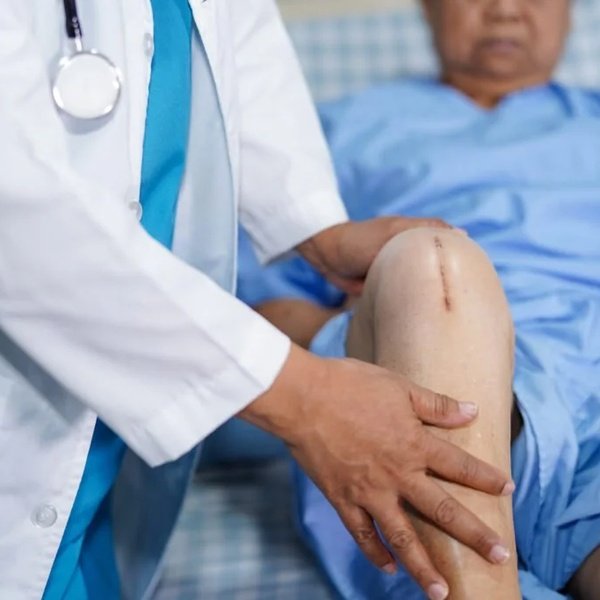
The procedure aims to reduce pain and restore joint function. With good aftercare and knee physiotherapy exercises, many people return to their everyday activities with a much better quality of life. Joint replacement surgery is a major leg surgery in Ghaziabad that needs careful planning, so a clear consultation matters. Patients who are unsure whether they need surgery can first explore the available orthopaedic treatment options and receive an evaluation based on their symptoms and joint condition.
Stages of Knee Osteoarthritis: When Is Surgery Needed?
Doctors often describe the stages of knee osteoarthritis from 1 to 4:
Stage 1
Minor
Tiny bone spurs, usually no pain.
Stage 2
Mild
Occasional stiffness and pain after activity, with some narrowing of joint space.
Stage 3
Moderate
Regular pain, swelling, and visible cartilage loss.
Stage 4
Severe
Very little cartilage left, constant pain and stiffness.
Most people with stages 1 to 3 are treated first with exercise, weight control, medicines or injections. Surgery is usually considered in stage 4, or earlier if pain stops you from living normally. Your X-ray and examination will show your stage.
Types of Total Knee Replacement Surgery
At Amicare Hospital, we offer different types of total knee replacement procedures planned around your knee damage, lifestyle, and recovery goals.
Traditional Total Knee Replacement
The damaged joint surfaces are replaced with implants, ideal for severe arthritis or widespread damage.
Robotic Total Knee Replacement
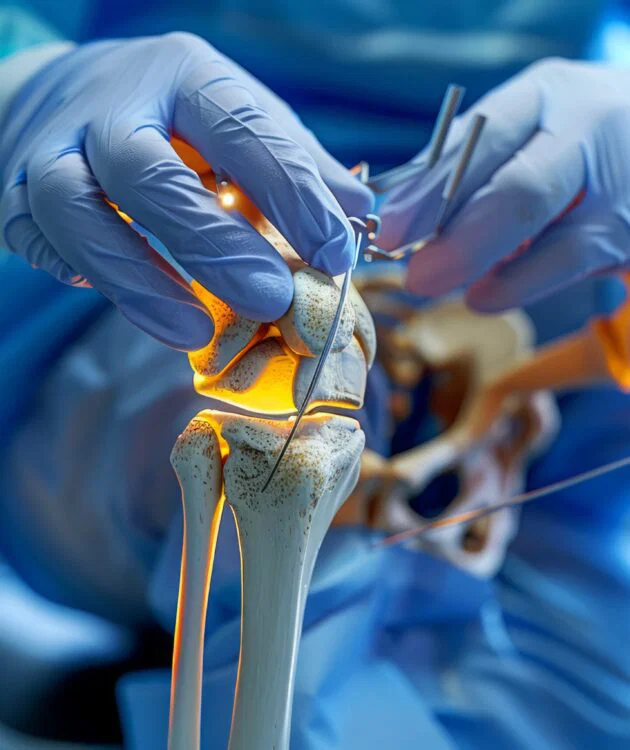
A robotic arm helps the surgeon place the implant using a 3D plan, which may improve alignment and support faster recovery.
Partial (Unicompartmental) Knee Replacement
Only the affected part is replaced, preserving healthy tissue.
Bilateral Knee Replacement
Both knees are replaced, which suits people with arthritis in both joints when general health allows.
Depending on the extent of joint damage and the patient’s condition, other joint surgery options may also be considered as part of a personalized treatment plan.
Indications for Total Knee Replacement
You may need TKR surgery in Ghaziabad if you have any of these signs. An examination and X-ray help confirm whether surgery is right for you.
- Constant knee pain – discomfort that limits everyday activities despite treatment and physiotherapy
- Swelling and stiffness – inflammation or limited movement that does not improve
- Difficulty with movement – trouble walking, climbing stairs, or sitting cross-legged
- Dependence on painkillers – long-term medicines that point to advanced joint damage
Total Knee Replacement Surgery Cost in India & Ghaziabad
The total knee replacement surgery cost in India depends on the surgical method and patient-specific factors. Amicare Hospital gives a clear estimate after your assessment.
For a detailed breakdown of the different procedure types, implant costs, and other factors affecting the total expense, patients can also review this guide to knee replacement surgery cost in India.
Understanding the available knee implant types, their costs, and expected lifespan can also help patients prepare for a discussion with their orthopedic surgeon.
Estimated cost (per knee)
The final cost is decided after a medical assessment.
Cost Depends On
- Type of knee replacement (traditional or robotic)
- Knee implant selection
- Hospital stay and physiotherapy
- One knee or both knees
We prioritise transparent pricing, and our team helps with insurance and cashless approvals.
Before and After Knee Replacement Surgery: What Changes?
Before surgery, many people have:
- Pain when walking, standing, or at night
- A stiff, swollen knee
- Trouble with stairs and floor-level activities
After surgery and rehabilitation, many people notice:
- Less pain in the knee
- Better walking and standing
- Improved movement and confidence
Results vary by person. Your surgeon will explain what is realistic for your knee and lifestyle.
Rehabilitation & Recovery After Total Knee Replacement
Knee replacement surgery recovery time varies from person to person. With expert care at Amicare Hospital, most patients notice better knee function and less pain within weeks. Knee operation recovery time depends on your age, health, and rehab effort. Following post-operative instructions and avoiding common recovery mistakes can help patients protect their new knee and support a smoother rehabilitation process.
First 2 Weeks
Pain control, light walking and early physiotherapy.
3 to 6 Weeks
Swelling reduces, walking improves, and strength builds.
3 to 6 Months
Return to most everyday activities and light exercise.
6 to 12 Months
Full recovery and stable implant function.
Our rehabilitation programmes are tailored to each patient to support steady healing and lasting mobility.
Total Knee Replacement Success Rate
Large studies show that more than 90% of knee replacements are still working well 10 to 15 years after surgery, and many knee implants last 15 to 20 years or longer. This is the general knee replacement success rate seen in published research. It is not a promise for any one patient.
- Traditional surgery: a long record of reliable results, though implants can wear over time.
- Robotic surgery: robotic assistance may help align the implant more precisely, though long-term advantages are still being studied.
The knee replacement surgery success rate and the knee operation success rate depend on your health, weight, activity, surgical planning, and rehabilitation. Your surgeon will discuss your own outlook.
of knee replacements are still working well 10 to 15 years after surgery, based on large published studies.
Many knee implants last 15 to 20 years or longer.
Exercises After Total Knee Replacement
Rehabilitation is a key part of recovery. Our physiotherapists guide you through a personalised plan of knee replacement exercises.
Straight Leg Raises & Ankle Pumps
Strengthen the thigh and lower leg muscles.
Heel Slides
Improve bending and prevent stiffness.
Gentle Cycling
Supports smooth movement once your surgeon approves.
Avoid High-Impact Activity
No running or jumping until your surgeon clears you.
Regular practice under guidance helps reduce stiffness and restore strength.
Risks & Complications of Total Knee Replacement
Complications are not common, but you should know them.
Choosing an experienced orthopedic surgeon in Ghaziabad, along with proper rehabilitation, helps lower these risks. Your surgeon will explain them before surgery.
- Infection or blood clots – need quick medical attention
- Implant loosening or wear – may need revision surgery over time
- Stiffness – more likely if physiotherapy is skipped
- Nerve or blood vessel injury – rare but possible

Meet Our Knee Replacement Surgeon in Ghaziabad
Dr. Himanshu Gupta – Senior Orthopedic & Joint Replacement Surgeon
Dr. Himanshu Gupta is an internationally trained orthopedic surgeon with 20+ years of experience in orthopedics and sports injuries. He is a gold medalist from King George Medical College, Lucknow. His joint replacement fellowships include Leelavati Hospital, Breach Candy Hospital, and Asklepios Hospital, Mannheim, Germany.
He has performed 2,000+ robotic surgeries and 2,500+ arthroscopic surgeries, and he plans each knee replacement around your anatomy, lifestyle, and goals.
Specialisation
Experience: 20+ years
Hospital: Amicare Hospital, Ghaziabad
Why Choose Amicare Hospital for Total Knee Replacement in Ghaziabad?
Choosing the right hospital and surgeon matters for any knee surgery in Ghaziabad. At Amicare Hospital, you get:
- Experienced orthopedic and robotic surgery specialists – traditional and robotic knee replacement under Dr. Himanshu Gupta
- Advanced technology – modern equipment and robotic-assisted options for total knee replacement surgery in Ghaziabad
- Transparent pricing – a written estimate and help with insurance and payment plans
- Complete rehabilitation – guided knee physiotherapy and aftercare
- Experience you can check – 10+ years of orthopedic care and 20,000+ patients treated
FAQs on Total Knee Replacement Surgery
What is the average total knee replacement surgery cost in Ghaziabad?
At Amicare Hospital, the cost is ₹1.5 – 2.5 lakh for traditional TKR and ₹2.5 – 4 lakh for robotic TKR per knee. The final cost is confirmed after assessment.
What is the success rate of total knee replacement surgery?
Most studies report that over 90% of knee replacements work well 10 to 15 years later. Your own result depends on your health, surgery, and rehabilitation.
Which is better, robotic or traditional knee replacement?
Both are proven. Robotic surgery uses a 3D plan and may place the implant more precisely, while traditional surgery has a longer track record and often costs less. Your surgeon will advise on the best fit for your knee.
How long does recovery take after total knee replacement surgery?
Most people walk with support within a day or two and feel much better within 3 months. Full recovery can take 6 to 12 months. Robotic surgery may help some people recover earlier, but this varies.
Who is a good candidate for TKR surgery?
People with severe knee pain, stiffness, or deformity from arthritis who have not improved with other treatment are usually candidates. An examination and X-ray confirm it.
How long does a knee implant last?
Many knee implants last 15 to 20 years or longer, depending on your weight, activity, and care.
How long will I stay in hospital?
Most patients stay a few days, depending on health and surgery type. Your surgeon will confirm your plan.
Is knee replacement painful?
You will have some pain after surgery, but anaesthesia, pain medicines, and early physiotherapy help keep you comfortable.
Is TKR covered by insurance?
Many policies cover knee replacement, subject to terms. Our team helps with TPA and cashless approvals.
Can both knees be replaced together?
Sometimes, if your health allows. Your surgeon will advise whether replacing one or both knees at a time is safer for you.